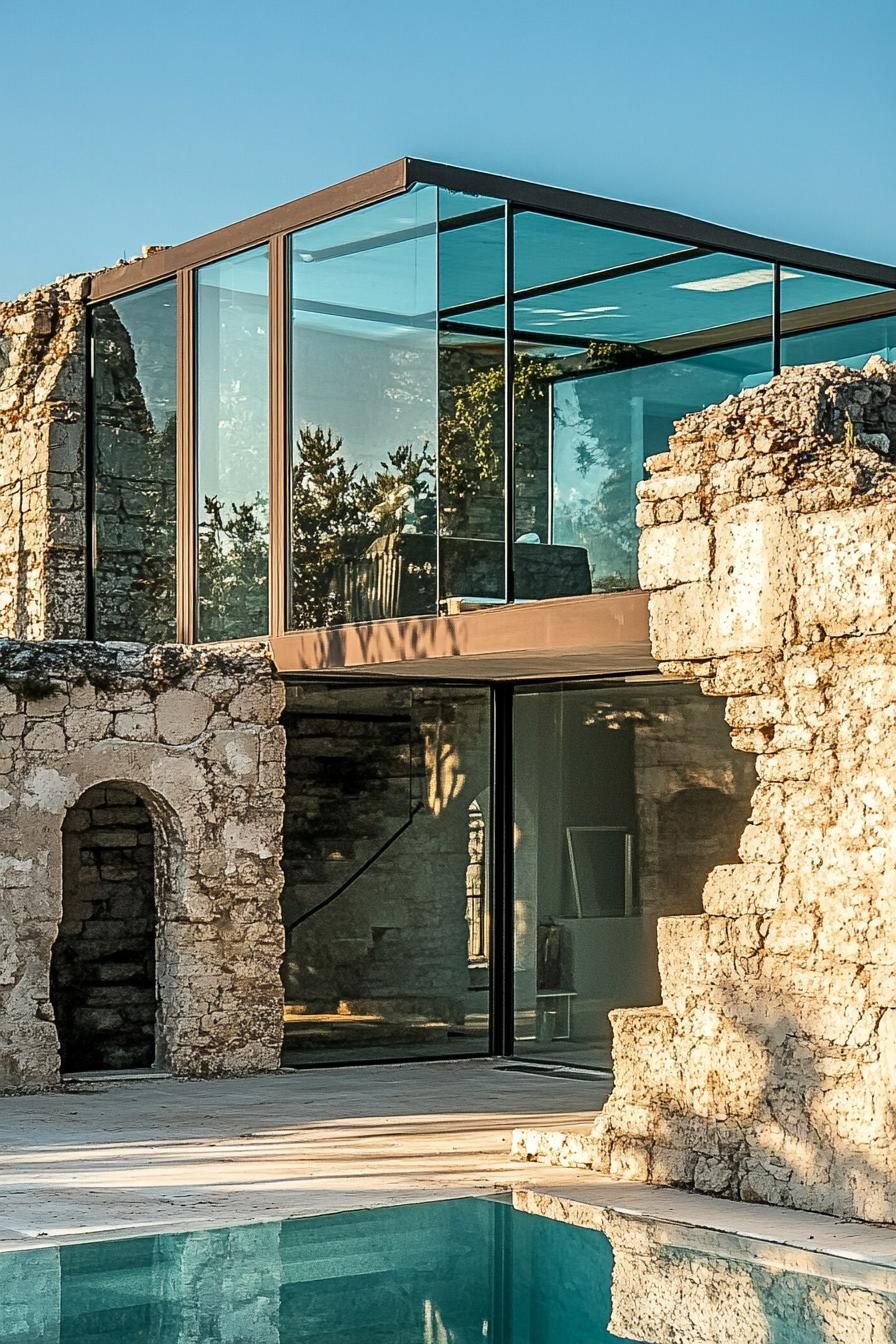
Architecture, at its best, is not about constant reinvention, it’s about continuity.
In a time defined by sustainability and responsibility, Adaptive Reuse has emerged as one of the most meaningful design philosophies of our era. It celebrates history while shaping the future, transforming forgotten structures into purposeful, enduring spaces.
At Atelier Roy Chaaya, we view Adaptive Reuse as both an act of preservation and imagination, where memory meets innovation, and architecture becomes a dialogue across time.
Preserving the Past, Designing the Future
Every existing structure carries a story. Adaptive Reuse honors those stories, not by freezing them in time, but by letting them evolve.
Through careful preservation of facades, masonry, and structural rhythm, architects can weave new functions into old frameworks without losing their soul.
The High Line in New York City is a perfect illustration: once an abandoned railway, now an elevated park suspended between history and renewal. Steel tracks, native plants, and contemporary detailing coexist, creating a living bridge between past and present.
Sustainability in Every Layer
Reusing what already exists is, by nature, an ecological act.
Adaptive Reuse minimizes waste, conserves embodied energy, and reduces the need for new materials. Yet true sustainability comes from precision, from how we design systems that allow these spaces to perform efficiently for decades to come.
Some of the most effective strategies include:
-
Energy-Efficient Lighting: Replacing outdated fixtures with LED systems that consume less and illuminate more effectively.
-
Passive Heating and Cooling: Introducing thermal mass, improved insulation, and shading devices to reduce mechanical loads.
-
Recycled and Local Materials: Using reclaimed wood, recycled steel, and low-impact finishes to reduce environmental strain.
-
Efficient HVAC and Water Systems: Integrating zoned heating, rainwater harvesting, and low-flow fixtures for long-term efficiency.
-
Daylighting Strategies: Framing light through skylights, light shelves, and high-performance glazing that connects interior space to the natural rhythm of the day.
Each of these interventions breathes longevity into the structure, preserving not just history, but also resources.
The Innovation of Restraint
Adaptive Reuse projects thrive on constraint. The existing structure defines a boundary, within it, architects find opportunity.
This challenge sparks creativity. A power station becomes a museum; a factory turns into a co-working hub.
The Tate Modern in London, once a decommissioned power station, now houses one of the world’s most dynamic art spaces. Its industrial shell remains intact, yet its interior is reborn through light, volume, and purpose.
Innovation here is not loud, it’s quiet, deliberate, and deeply respectful of context.
Community and Continuity
Beyond their physical transformation, Adaptive Reuse projects often revive communities.
When neglected landmarks become public spaces, they reconnect neighborhoods to their identity.
The Old Melbourne Gaol in Australia is one such example, a place once marked by confinement, now reimagined as a museum where people gather to learn and reflect.
Architecture, in this way, becomes a social act. Adaptive Reuse doesn’t only preserve buildings; it preserves belonging.
Building with Memory
Adaptive Reuse is not nostalgia. It’s a forward-looking practice rooted in care, for materials, for culture, and for the planet.
By merging heritage, sustainability, and design intelligence, architects create spaces that feel both familiar and new.
At Atelier Roy Chaaya, we see every existing building as an opportunity to reinterpret, not replace.
Through refined detailing, responsible intervention, and poetic restraint, we transform structures into stories, enduring, meaningful, and alive.